What is Online Content Construction?

Writing and online content construction is and will continue to be a vital part of all student’s academic careers. We can define online content construction as when students are encoding and decoding meaning by constructing, redesigning, and reinventing online texts. In today’s society, we have many new online tools to create online content of our own. As a future educator, I believe that it is important to encourage my students to be creative and have their voices heard whether it be online or offline. In order for students to create their own content online, I feel it is necessary to discuss what a multimodal design is (click here to watch a video on the principles of multimodal learning.) Multimodal design tools are simply just text, images, videos, and audio that help a creation look professional and add more meaning to the voice who created it. With the digital tools online today it allows students to think further about the style, tone, and voice of a piece. Also, as a future educator, I believe it is important for students to understand who their audience is so they can use their voice to express or even persuade them. 

This topic, online content construction is closely connected to the Web Literacy Model. This falls under the “write” stage in this model and specifically focusses on creating content. In this stage, you are designing, coding, revising, and lastly remixing. When a student remixes something it means that they take other content found online that others have created and remix to their voice and share their version online. This should be encouraged in schools because it allows for what we know as a remix mashup culture. Students will get to read others’ beliefs and values while still learning and creating. In today’s society, we as educators, parents, and friends must-see times are changing and we must encourage students to create, revise, and collaborate online and offline.
What is Online Reading Comprehension?

Online reading comprehension is defined as, students or individuals searching for shifting relevant information from print and digital texts while assessing credibility (click here to watch a video defining online reading comprehension). The internet as many may agree with is the dominant text students today read, students, are continuing to read their online resources rather than offline sources. The use of the internet in education systems extends the boundaries of literacy, and I believe that is important for the generations to come. The nature of literacy is frequently changing, so we as humans must be prepared for the future of technology for literacy and learning. There are five different components an individual must be able to complete in order to be successful at online reading comprehension those components are: questioning, locating, evaluating, synthesizing, and lastly communicating. Questioning is when students are able to restate a question being asked into their own words. Also, students are able to formulate keywords from a question. When students are able to evaluate online reading effectively they are able to understand when the content meets there needs, able to identify the author of the text, and lastly are able to judge how much knowledge an author has on the subject that they present.. Locating is simply defined as a student using different search engines like google chrome and internet explorer to find online reading material. Finding the needed information in the text and dismissing that information that is not necessary is also a form of locating. Synthesizing occurs when a child selects and constructs information that can be utilized to their benefit. Many online sources contain pictures, numbers, and data, when a child is decoding this information, they are effectively synthesizing. In today’s society, there are many ways that an individual can use to communicate with their peers, colleagues, family, and friends. When an individual is able to appropriately choose a digital platform to present all the information found on a specific question they are using their online reading comprehension skills.

We as parents, students, educators and influencers must acknowledge the growing use of the internet. The internet is able to allow us to have access to more resources than printed material in libraries. The communication aspect has allowed us to participate in online collaborative inquiry. If you do not find the internet useful, you may need to rethink your idea because it is only growing, and expanding ways that it can and will be used.

What is Online Collaborative Inquiry?

What is Online Collaborative Inquiry? Well, it is defined as a group of local and global learners who reach a common outcome while co-constructing multiple pathways of knowledge. We as humans are continuously using the internet as a tool to benefit our work in and out of academic settings. Examples of good online collaborative tools are Flipgrid, Padlet, and Blogger (Click on them to go to their websites). These all allow students to communicate and collaborate with peers and others throughout the world that have different views or values than them. On the Web Literacy Map, Online Collaborative Inquiry falls under participate. Participate includes the following: sharing, collaborating, community participation, and privacy. In order to participate students must be engaged in their learning, and traditional education can lack student engagement.

In order to be effective in the classroom, we as a community must allow for connected learning. Connected learning is when someone is pursuing a personal interest with the support of peers, mentors, and caring adults, and in ways that open up opportunities for them. To watch a video on this concept click here. When an individual is a connected learner, they have a web of relationships and organizations that support their learning, beyond the formal educational pipeline. Some argue that technology is too big of a distraction to incorporate into their lesson plans, but I would argue that. Technology can be beneficial as long as it is incorporated in the appropriate way. There are many principles of connected learning which include the following: interest powered, production centered, peer-supported, shared purpose, academically oriented, and lastly openly-networked. Research has proved that when children are personally interested in a topic, the learner achieves a much higher learning outcome. Production centered focuses on producing and creating, this promotes skills for lifelong learning. If one has these skills one can make meaningful contributions to society. When individuals have peer support they are more likely to thrive socially. Shared purpose allows students to make connections with others online who share a common interest.

Lastly when a student or child is supported not just in their school environment but multiple other settings in their lives they are able to achieve great success. As one can conclude we must examine all the opinions on connected learning because it truly can benefit children socially and intellectually. I believe that in order for our students or children to strive academically we as educators, parents, grandparents, or caregivers must allow our minds to become open minded to the evolving world around us.

What does it mean to be ‘Web Literate”?

The world we know and the things around us every day are continuously changing. Modern technology has become more prevalent in and out of the classrooms now more than ever. This has created a critical debate in our society as to how to incorporate the “appropriate” amount of technology integration and use of it in the classroom. Educators in today’s society stand divided by this issue. We can see many who love to find new ways to incorporate technology resources into lesson plans, while many others stick to traditional resources and practices. If one thinks about their everyday life, and how many times a day they text, look on social media sites or just simply browse the internet? One most likely does not know, but as discussed in an article titled, Digital Literacy Fundamentals (click here to read) we as humans live in a media-rich environment. This means that children and adults have a need to become digitally and web literate and conscious of the decisions with technology.

The definition of what it means to be “web literate”, is simply the understanding of the skills one must possess in order to read, write, and participate on the web. To further understand this idea, one can look to the Web Literacy Map (Figure 1.1). This map is divided into three transparent categories that are: participate, read, and write. When an individual participates it means to connect, inquire, and collaborate all on the web. One must read, and explore the content on the internet/web and use their comprehension skills. Lastly, in order to be web literate, you must write. Building content using one’s creativity and online construction skills. I know for me that this model was not the easiest thing to understand, but the more the individual reads about this model the more it makes sense. If you would like to learn more information on web literacy click here. 

As discussed earlier, there is a debate on how much technology is too much in the classroom. As our society continuously evolves, there is a high demand for the integration of technology into the classroom, but we must understand how this event occurs. The SAMR model represents just this as seen in this visual representation. SAMR is an acronym for Substitution, Augmentation, Modification, and lastly Redefinition. This model focuses on two things in the classroom, enhancement (substitution and augmentation) and transformation (modification and redefinition). With substitution, technology acts as a direct substitute with no significant change. An example of this is a student writing an essay on a computer rather than paper, they are still writing an essay simply on a different platform. Augmentation also apart of enhancement in the classroom acts as a substitution with some functional improvement. This idea would be creating an essay on a Google Doc, which is capable of being shared with peers and teachers for feedback. Modification is when technology allows for significant task redesigning. That Google Doc the student created now has been formed into a blog post. Students are able to research and use their creativity to present information to an authentic audience. Lastly on the SAMR model is redefinition, this allows the technology to create new tasks that were previously inconceivable. Now, that essay has now become a blog post that is a multimedia package. Click here to watch a video that briefly explains the SAMR Model. 

In order to improve the way, we use technology over time in and out of the classroom, we as humans must become educated and familiar with these topics. Incorporating what it means to become more digitally and web literate, also how we can integrate technology into the classroom, for both the benefit of the educator and the student.

What is text?

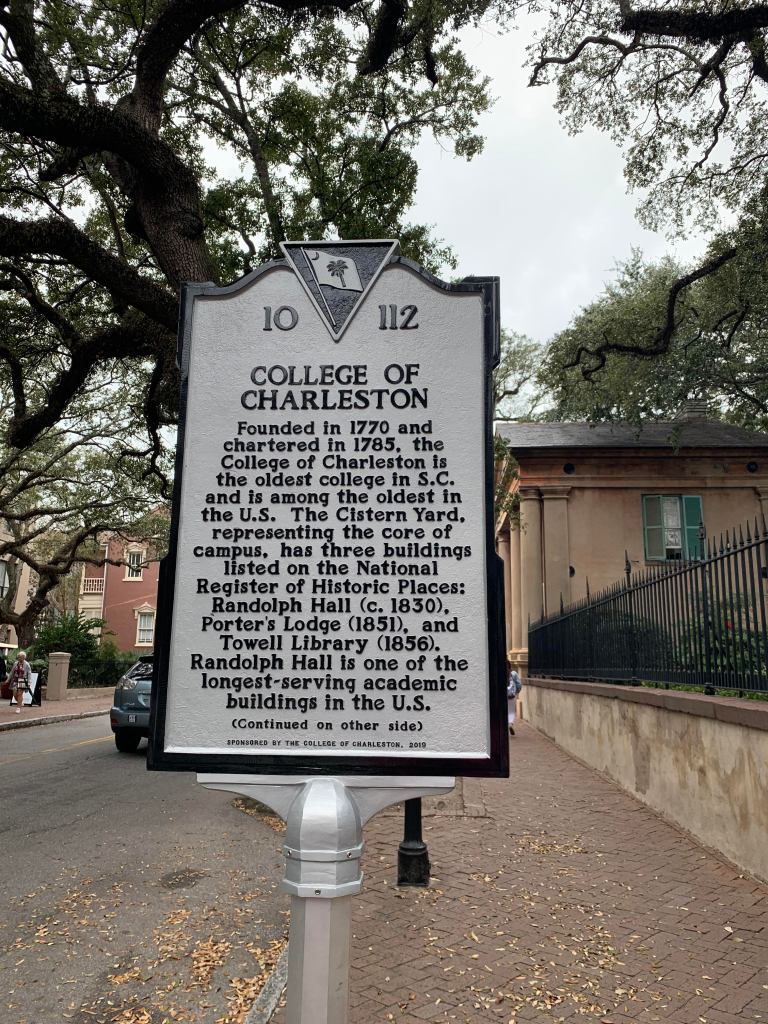
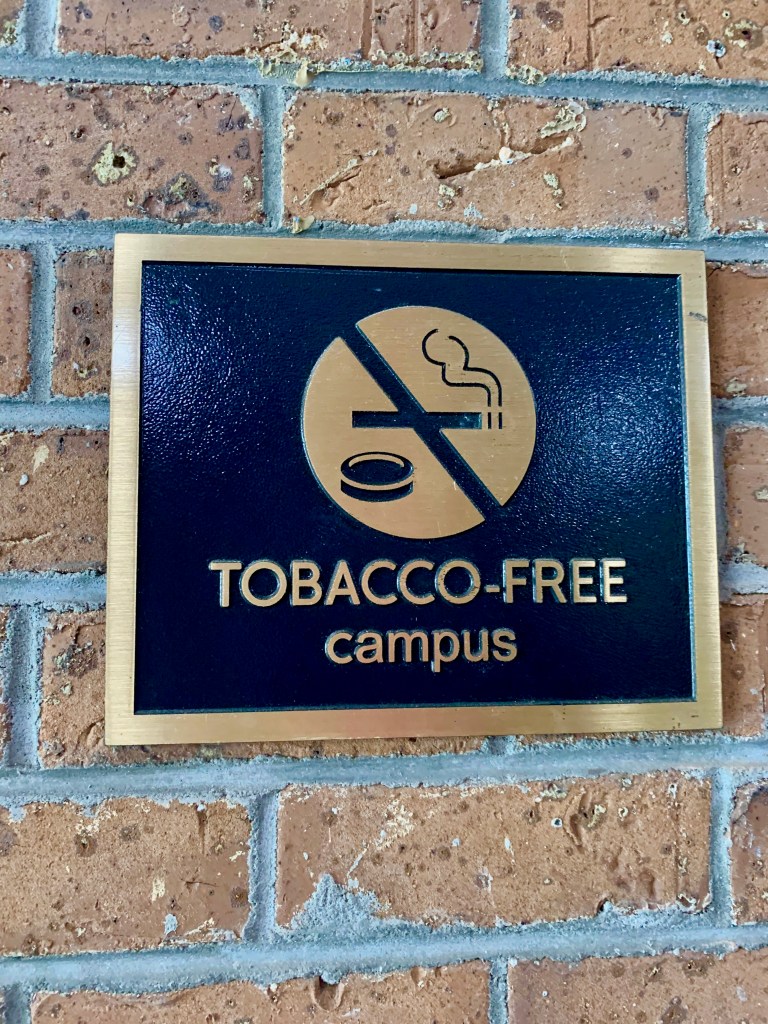
Text can be anything from books, to written music, to signs. Text can be defined as anything that conveys a set of meanings to the people who examine it. As a future educator it is important for me to allow my students to explore text and understand that there are several different definitions of text. We as humans are around different types of text everyday, I encourage the next time you go out to take pictures and see how many different types of text you can find. Below are images of text located in Charleston South Carolina.

Downtown Charleston, SC is full of historic sites! As pictured above, when walking the city’s streets one can see these historic landmark signs. This is located on the corner of Saint Phillips Street and George Street.
The College of Charleston has a tobacco-free campus. Many signs like this one are posted around the campus.

Design a site like this with WordPress.com
Get started